

CALL
ME
BY
MY
NAME
BY FUNMI FETTO
PHOTOGRAPHS BY CHARLES NEGRE
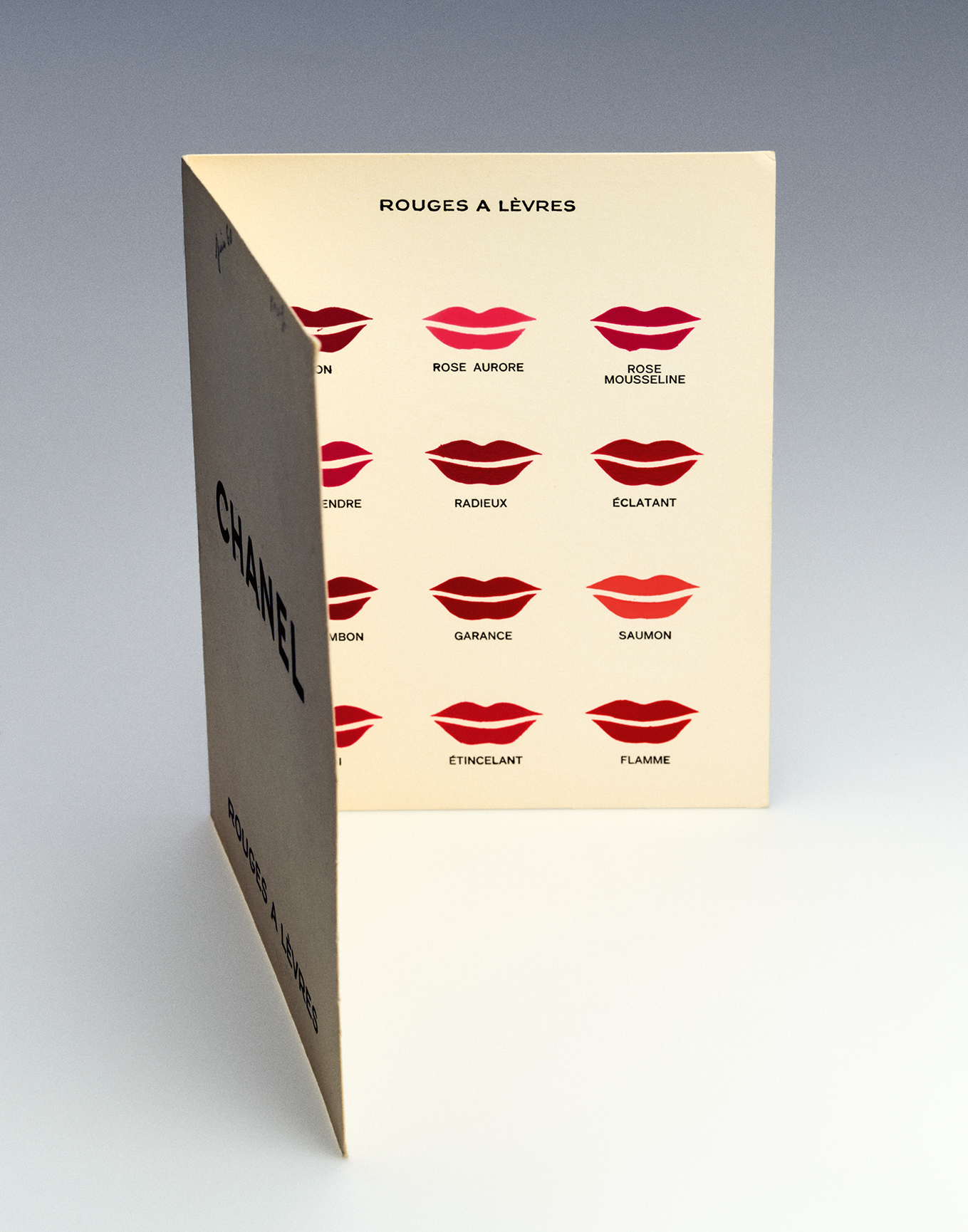
Chanel’s first red lipstick was launched in Paris in 1924. Hundreds have followed, highly nuanced in hue, finish and texture, making red one of the emblems of the maison. But what’s in a name, asks the author and beauty editor Funmi Fetto
THERE IS a much-loved anecdote that was told by one of the seamstresses who worked under Gabrielle Chanel. “She recounted that as soon as Mademoiselle would arrive at rue Cambon, all the petites mains – the seamstresses – as well as the models, would quickly apply red lipstick to please her,” says Nathalie Lasnet, Vice-President of the Chanel Makeup Creation Studio. For Gabrielle Chanel, red was not a frivolous flourish but a matter of conviction. “Red had a symbolic meaning for her,” Nathalie Lasnet continues. “She associated it not only with power and seduction, but also quite simply with life, ardour and passion. As she used to say, ‘Red is the colour of life, of blood. I love red.’ It was its duality and ambivalence – between desire and innocence, a fiery spirit and gentleness, passion and reason… This is what made the colour red so fascinating to her. This is why it is so deeply anchored in the history of Maison Chanel.”
And so, at Chanel, the naming of red lipsticks is treated with the same precision as the tailoring of a tweed suit. “Much like it is with a work of art, whose name gives it a symbolic and creative significance, we consider the names we give to our shades to be a determining factor in our creative process. They finalise the colour story… ” Nathalie Lasnet explains, “and sometimes they are the starting point.”
At Chanel, the act of naming a red is both poetic and forensic. While more than 500 shades of red have been created in over a century, each name is an identity as distinct as a fingerprint. Pirate, the flamboyant, rebellious red suggested swagger and mischief when it was launched in 2001, and over 20 years later, when Chanel revealed the 31 Le Rouge line, it wasn’t merely about new lipsticks but capturing the spirit of fashion. The collection debuted with 12 refillable shades, encased in faceted glass inspired by the mirrored staircase at 31 rue Cambon. Rouge 2.55, a garnet red, nodded to the lining of Gabrielle Chanel’s iconic handbag, while Rouge Fétiche honoured her talismanic rituals. Each shade fused heritage with sustainability – the line was refillable, collectible. Meanwhile, the vibrant Rouge Vie, a Chanel bestseller launched in 2016, “embodies the idea of life and vitality, as well as an image of femininity that is natural, authentic and spontaneous”, Nathalie Lasnet says. Rouge Allure Ink, which debuted the same year, spoke directly to a generation seeking timelessness – its name a promise of sensuality and stability, irresistible. No house has weaponised nomenclature quite like Chanel. For the maison, red is not simply a palette but a lexicon of cultural codes. Each shade is christened like a short story; each name carries its own mythology. Chanel has always understood that in beauty, as in fashion, naming is power. And when the shade is red, that power deepens.
“I’m always wondering why red is so much of a Chanel colour,” muses Thomas du Pré de Saint Maur, Chanel’s Global Head of Creative Resources Fragrance and Beauty. “It’s not just red as a code but red as an obvious representation of an idea, a vision or a belief.” For him, red is inseparable from emotion at its most primal. “I personally think Gabrielle Chanel did everything because of love, because she knew that a life without love is a loss of everything. The feeling of love is that moment where everything expands, where nothing becomes impossible, because there’s this expansion of your world, your dreams, your power, your resilience, your audacity… I believe she chose red for that reason, because the feeling of that colour represents that moment of intensification, of deepening, of enlargement. Which is why I always say, with Chanel there’s no such thing as a little red. It’s always big, it’s great and it’s bold.” For Gabrielle Chanel, red was a signature of character. A woman could walk into a room defined not by excess but by precision: a black dress, a string of pearls, a spritz of N°5, her red lips. Naming, then, was never about ornamentation. Rather, it was about intention.
Chanel’s first lipstick was launched in 1924. The hue was inspired by the colour of the coromandel screens in her apartment. By the mid-century, Chanel lipstick-shade names hinted at glamour and lifestyle: Rouge Flamboyant, Rouge Incandescent. “In the 1960s you had names of Eastern, Indian and Turkish cities… It was very global. And in the Eighties and Nineties, lots of the shades followed the themes of the make-up collections. So the names were always changing with the times,” explains Julie Deydier, Fragrance and Beauty collections curator at Chanel Heritage – the house archive that includes the majority of the lipsticks launched by Chanel.
In the 1960s the range comprised 12 shades that mirrored the era’s imagination. There were names such as Bombay that referenced the adventure of Jackie Kennedy’s travels. Through the 1970s, Chanel deepened its palette with Pivoine, Prunelle and Feu. The 1980s brought the “blue period” – cool-toned reds such as Aurore that reflected the sophistication of the supermodel era. Then came the 1990s, and with that, the vampish, subversive red-black of Rouge Noir, a colour that rewrote beauty history. In the 2000s it was desaturated tones, while the 2010s and beyond reclaimed luminosity with high-saturation reds like Coco. That shift was also reflected in Lucia Pica’s tenure as Global Creative Makeup and Colour Designer (2015–20), during which she introduced Rouge Vie. “Reds were both powerful and nuanced,” Nathalie Lasnet says. “It was in this period that we revealed a new family of shades – our ‘bois de rouges’, our redwoods. In the 1990s, with Dominique Moncourtois, Chanel reds were, on the contrary, bolder and more vibrant, reflecting a vision of red as a colour of conquest.”
Red lipstick has long acted as a cultural timestamp, signalling revolution, power or defiance. In the 1910s, suffragettes daubed their lips crimson as they marched in New York and London. In the 1920s, flappers embraced red as a shorthand for sexual liberation. Silent-film stars like Clara Bow made red lips synonymous with the It girls of the time, while thanks to 1930s and 1940s screen icons such as Marlene Dietrich and Greta Garbo, red lipstick became the language of cinematic seduction. During the Second World War, Hollywood and propaganda merged: women were encouraged to wear bright red lips as patriotic morale boosters. Some feminists rejected red lipstick, seeing it as a symbol of patriarchal control. Yet, by the late 1970s, it began to be reclaimed by punk and queer communities as an emblem of defiance. Red became a marker of rebellion and sexual autonomy. The “greed is good” era of 1980s excess elevated red lipstick to corporate armour. In the 1990s, red lipstick became a part of an anti-glamour aesthetic – defiant, raw and embracing female rage. (Chanel herself famously declared: “Put on lipstick and attack!”) During the 2010s, “red lips” became a shorthand for romance, heartbreak and millennial femininity, a cipher for both power and play. Each of these transitions underlines Chanel’s understanding: lipstick speaks before you do.
Over time, red has shifted meanings across cultures. In Beijing, it signifies prosperity; in Lagos, spiritual vitality; in Paris, passion; in New York, power. Thomas du Pré de Saint Maur, however, frames it in universal terms: “We are a French brand and while red means something different in every culture, there are things that are universal. Romeo and Juliet, for example, can be expressed in any context. It is about the way we communicate emotion and how people connect with that emotion. That is part of our equity. We manage to convey a universal story in a French style and allure. And that’s the beauty of it. While a Chanel red has variety, it also has commonality. Because whether we like it or not, that’s the colour of blood. Which is what every single person in the world has.” Or, in the words of Chanel herself: “Red, because it’s the colour of blood and we have so much of it inside us that we have to show a little bit of it outside.” (Chanel solitaire by Claude Delay, 1983, Paris, Gallimard.)
CLASS OF 2026: 138 CHANEL LIPSTICKS
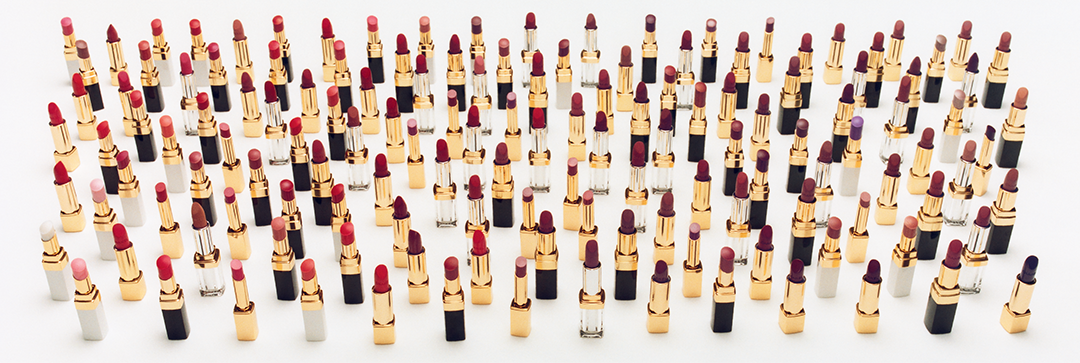
Psychologically, red heightens perceptions of confidence and authority. Gabrielle Chanel herself treated red as a talisman. She would tie red ribbons around her ankles before presenting collections, inspired by horse-racing customs. That ritual is echoed in the shade Rouge Fétiche, named as an ode to charms believed to carry luck and magical protection. “It is interesting, this esoteric dimension of red resonates with today’s world – more and more people are not only seeking reassurance, but also a sense of wonder and enchantment that the world of luck, magic, divination and mysticism can bring,” Nathalie Lasnet says.
Julie Deydier reflects on this attempt to honour the past while speaking to a new generation: “At Chanel we are very aware of the importance of history and heritage, because if you know your past, you can better create for the future.” Nathalie Lasnet agrees – “We are constantly connected to our brand’s heritage and continue to discover new anecdotes and new creations from the past… which we bring into dialogue with the present… as well as project them into conversations with the future. At the Studio, we are as much the guardians of a heritage as we are of a vision.”
It is an ambition that finds its purest expression in one of the house’s most enduring codes: red. Because, for Chanel, every red begins with a name. Rouge Vie, Rouge Noir, Pirate, Gabrielle, Coco – each carries its own mythology. A name transforms a colour into a story, a lipstick into an idea, a collection into a language of femininity. To name is to define, to dream, to dare. When a woman chooses her Chanel red, it is an act of agency – of autonomy, of audacity. She isn’t simply choosing a shade; she’s choosing the story she wants to tell.